Anthrax
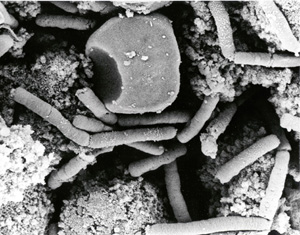
Anthrax, also referred to as splenic fever, is an acute infectious disease caused by the bacteria Bacillus anthracis and is highly lethal in some forms. more...
Anthrax most commonly occurs in wild and domestic herbivores, but it can also occur in humans when they are exposed to infected animals, tissue from infected animals, or high concentrations of anthrax spores. There are no known cases of infection in humans resulting from direct contact with a diseased person. The word anthrax is derived from the Greek word anthrakis, or "coal", in reference to the black skin lesions victims develop.
Overview
Anthrax infection is rare in humans though occassionally occurs in herbivores, such as cattle, sheep, goats, camels, and antelopes. Anthrax bacteria are present globally. The disease is more common in developing countries without veterinary public health programs while developed regions of the world (North America, Western and Northern Europe, and Australia) report fewer cases of anthrax in animals. There are 89 known strains of anthrax. The most widely recognized strain is the virulent Ames strain used in the 2001 anthrax attacks in the United States.
The Vollum (also incorrectly referred to as Vellum) strain, is also suitable for use as a biological weapon. The Vollum 1B strain was isolated in 1935 from a cow in Oxfordshire, UK, and used during the 1960s in the US and UK bioweapon programs. The Sterne strain, named after a South African researcher, is a benign form used for inoculations. Other strains include the ANR-1, δAmes, A-3, RP4 and RP42. Strains of anthrax differ in the presence and activity of various genes that determine their virulence and the production of antigens and toxins. For more information, see this list of strains.
Read more at Wikipedia.org